
VIRGINIA 🇺🇸: The Place You Drive Through (Until You Stop to Look) [Episode 10.0]
Virginia was the place I kept looking past—until I realized it had been quietly building me all along. A podcast episode about identity, underestimated hometowns, and the culture hiding in plain sight.
CORNERSTONE EPISODES
3/31/202624 min read
I grew up in Northern Virginia surrounded by difference so constant it felt invisible — locker corners between the Kims and the Lees, friends' houses that smelled unfamiliar until they didn't, a hometown that never came with an obvious story to wear.
For years, I looked outward for identity. D.C. felt easier to say.
Then I ended up in a small venue outside Frankfurt, watching D'Angelo walk onstage. Allen Iverson had played summer league a metro ride from my childhood house. Pharrell, Pusha T — all Virginia. And I was the last to notice.
This episode is about the place I kept underestimating, and what it quietly built in me before I knew to look.
THANK YOU
Sarah, Ken, Charlie, Jeff, Peggy, Karen, Dylan, Alice, Jack, Angela, Kristen, Reub & the lovely folks of the Boston.com, r/bostonma and r/boston communities — for your thoughts and voices.
And shoutout the artists below for giving some Virginia flavor to the episode. I could have gone deeper if I expanded it to "DMV"---but there was plenty to work with from VA proper...703/757/804/540/434...
TRACK LIST (in order)
Wake Up (Beat) - TN_Beats
Brown Sugar (Live) - D'Angelo
Grindin' - Clipse (produced by The Neptunes)
Lonesome Without You - Ralph Stanley & The Clinch Mountain Boys
Young Boy - Clipse (produced by The Neptunes)
Takes Two to Tango - Pearl Bailey
Million Dollar Baby - Tommy Richman
Slow Dance - Yoo Chun Park
Kiss Kiss - Chris Brown (ft. T-Pain)
Rockstar - N.E.R.D.
Sick of You - Gwar
Na Na - Trey Songz
Afro Puffs - The Lady of Rage
Crazy - Patsy Cline
Laid to Rest - Lamb of God
Hail to the Redskins
After the Storm (ft. Tyler the Creator, Bootsy Collins) - Kali Uchis
If You Know You Know - Pusha T
Flowers On the Wall - The Statler Brothers
The Nod Factor - Mad Skillz
Can't Feel at Home - The Carter Family
Cumbersome - Seven Mary Three
Sweet Virginia Breeze - Robbin Thompson, Steve Bassett
Pretty Girls - Wale
A Bar Song (Tipsy) - Shaboozey
Crash Into Me - Dave Matthews Band
Luv 2 Luv U - Timbaland & Magoo
Crew (ft. Brent Faiyaz, Shy Glizzy) - Goldlink
Happy - Pharrell Williams
Virginia - Clipse
Rebecca - The Pat McGee Band
The Birds Don't Sing (ft. John Legend) - Clipse
The Way It Is - Bruce Hornsby and the Range
I'm Yours - Jason Mraz
Dream A Little Dream Of Me (ft. Louis Armstrong) - Ella Fitzgerald
Dreamin Of The Past (ft. Kanye West) - Pusha T
Work It - Missy Elliott
Carry Me Back To Old Virginny - Ray Charles
Are You That Somebody (Remix) - Aaliyah ft. Supafriendz
Supa - Supafriendz
I Read - K-Beta (live on PBS)
(Full transcript below photos)


It was just above freezing when I left my friend’s apartment. Now it was dipping under, and the light was going fast.
My calf was cramping. My back heel was blistering from running shoes I was still breaking in. And I still had two miles to get back home.
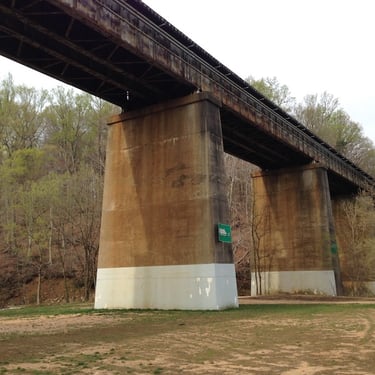
I’m passing Frankfurt’s main station, and the bridge I recognize finally comes into view—the bridge that will take me across the river and onto the trail home. Back to a hot shower, a jug of water, maybe a cold beer, and relief from these god-forsaken shoes.
And then I see it.
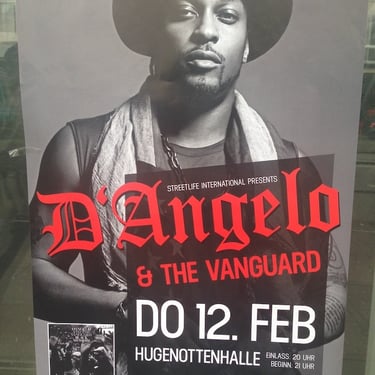
A wall of posters. One face staring back at me like it recognized me first.
D’Angelo.
I slowed down. Concert poster. Cool — D’Angelo was in town — wait.
February 12. That’s tomorrow.
I’m not thinking about the cold anymore. Or my calf, the blister, or the blood in my sock. I had one job: get back to that apartment, get online, and figure out how to get inside that room.
I got a ticket. Two, actually — because if I was going to see D’Angelo, I wanted my friend to see him too. Not because he’s American. Because he’s Virginia.
And when D’Angelo walked out onstage the next night — looking like the coolest man alive — I felt something I didn’t expect: state-level pride. Like I’d been carrying this flag in my pocket without realizing it.
I didn’t learn pride at home. I learned it abroad.
But I should’ve known all along, because my high school locker taught me my entire hometown in one hallway.
***
This is EveryCity Whispers, a show about the quiet messages cities send us, and how they shape who we become. I’m Steven. And today we’re wrapping up Season One, in my hometown…my home state of Virginia.
Up to now, this series has mostly been about the cities I chose. Virginia is the place that chose me first.
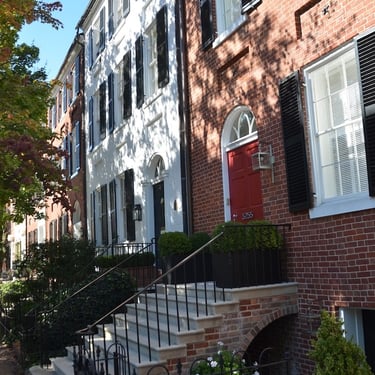
I grew up in Northern Virginia, where the world shows up early — different languages, different lunchbox smells, different expectations — packed into the same hallways. And when that’s your normal, you don’t think you’re growing up in something unusual. You just think: this is school.
But NoVA sits in a weird spot.
New York is close enough to feel like the big leagues. D.C. is right there, humming in the background. That’s where everyone’s dad works. Virginia? Virginia is the part you drive through on the way to something that seems cooler.
I never hated where I was from. I just didn’t know what to do with it. It didn’t come with a costume. It didn’t say much. It never demanded to be claimed.
Which is why, as a kid, I was always reaching outward, trying to borrow identity from somewhere else. Collecting cities like stickers. Imagining that pride was something you got by having a cooler-sounding address.
And then, all these years later, I’m standing in Germany, watching D’Angelo walk onto a stage, and having the weirdest first thought possible: that guy came through the same school system I did.
And suddenly I’m proud of Virginia in a way I can’t explain to my younger self.
So today, we’re going to figure out why — how a place I kept staring out of the window from turned out to be the one that shaped everything.
And it starts where all high school mythology starts: with lockers, and the corner I had to earn my way into every single day.
***
"When you think of VA or even the DMV, I don't think anybody thinks about cultural diversity. I think you think of certain things: the government and all the government jobs, things like that, proximity to D.C., monuments, etc. One of the things I think was astounding for me and just a beautiful thing growing up was the cultural diversity. I know they say, I think, Queens might be the most diverse place in the United States. But I've been to Queens, stayed in Queens, I have family that lived there. A lot of people in those areas stay to themselves, not as a segregation thing, but that's just what humans do; we stay in our little pockets. I think in our area, it was more of a balance and more of a cohesion and people interacting. There are large pockets of different groups of immigrants, different groups of people. I mean it's largely white in VA, especially northern VA, but there are so many different types of people and everybody actually interacts. Unless something happens to you, like some adverse situation or some kind of trauma, you're going to interact with people of other races and it's going to be often. You don't think everybody's Spanish is Mexican because a lot of Spanish people you meet are Bolivian, Peruvian, they're from wherever they're from, maybe Puerto Rican. And you know that. It's not everybody is Mexican or something like that. I know some areas are how it is and that's not a negative against Mexicans; it's just I noticed in certain areas when they see a Spanish person they go, "Oh that's amigo" and they talk about that's a Mexican person but it could be they could be from anywhere. I think that's a beautiful thing and I know people from all various countries, and I know how vastly different their cultures are. It's not just this one place with this one set of cultures and one set of norms. I realized how different they are just from growing up. Anyway my point is it's just a great great immersion into different cultures. You meet people of all types growing up. I’m not saying everybody gets along all the time. There's plenty of beef, plenty of tension, plenty of racism. And you know what, we learn is that racism isn't just black and white. There's a lot of Spanish folk that don't like each other, from different countries. There's a lot of Asian folks that talk down on each other and think their culture is superior to other cultures and stuff. So I don't know, it just makes you realize that the world is much broader because you get a true immersion into other peoples’ cultures as you grow up."
***
At my high school, lockers were assigned alphabetically by last name. You’d never even think twice about this, until the alphabet plays tricks on you.
My last name starts with K-L.
Which meant that my locker landed deep in the corner of an L-shaped wall, where the alphabet did something funny. Left side: Kims. Right side. Lees. And between classes, that corner became the default meetup spot for almost every Korean in my school, like an airport gate just before boarding.
So my day included this tiny ritual: wait for a gap, slide in, grab my books, slide back out — like I was slipping through someone else’s conversation without interrupting it.
It wasn’t unwelcoming or anything. Nobody was guarding the corner. It was just density and timing. Fifty or a hundred people in the same five-foot stretch because the alphabet said so.
Back then, I didn’t think of any of this as “diversity.”
When you’re a kid, you don’t really have a language for culture anyway. You don’t have concepts. You have senses.
I remember going to friends’ houses in elementary school — Indian friends, Vietnamese friends, Nigerian friends — and noticing something that feels almost embarrassing to admit because it’s so blunt and so kid-brained:
Their houses smelled different.
Not “bad.” Just unfamiliar. Spices you didn’t grow up with. Different cooking. Different air.
And I remember having the thought kids have when they don’t have the right words yet: this smells funny.
But the second or third time you go there, it stops being “funny.” It becomes their house. The smell gets tied to a specific couch. A specific game. A mom calling your friend’s name from the other room. A certain snack you only eat there.
Your brain updates fast.
That was the real NoVA education: unfamiliar things didn’t stay unfamiliar for long. The world kept showing up, and your mind kept adjusting.
You learn what changes and what doesn’t. You learn how to be around difference without staring at it. You learn to pick up what matters — tone, expectations, what’s allowed in one house that isn’t allowed in another.
And if that’s your baseline, you assume everyone else grows up the same way.
They don’t.
Most people grow up in one dominant “normal,” and difference arrives later — when they travel, or move, or start a new job, and suddenly everything feels loud.
In Northern Virginia, it wasn’t loud. It was constant. It was background.
But that creates a weird side effect.
Because when the world is already in your hallway, your hometown doesn’t feel like a single story. It feels like a place that’s always in motion — people coming from everywhere, headed somewhere else, orbiting bigger things nearby.
And when you’re a kid, that can leave you with a quiet itch:
If everything around you is already “global”...what exactly are you supposed to be proud of here?
***
"Northern Virginia is a place that both propelled and prepared me for the future that I now exist in. It is, at times, a remarkable memory and a reluctant part of my past that I choose not to visit. It is all of these differing emotions because growing up there, whether you say the small town of Chantilly, Virginia, the larger county of Fairfax, or just Northern Virginia, part of the DMV, all of these different swirling acronyms and identities. We are south of the Mason-Dixon line, thinking that we are East Coast and closer to New York, D.C. sensibility than we ever would think of being ‘southern’. You grow up in a place like that when you are someone like me — Segun Oduolowu — too black for the white kids, but too African for the black kids. Those swirling differences, they live in you and they make you like a Grimms’ fairy tale: seek your fortune."
"I know this episode is about VA as a whole, but here's a quick fact about just Fairfax County: Fairfax County has a larger population than states like Wyoming, Alaska, and probably a few others. If you looked internationally, I'm sure the one-point-something million people in Fairfax County is larger than some small countries. I say that to say you think about places like New York or Chicago, really busy cities. One of the huge advantages, whether intentional or unintentional, was that you have this melting pot of people, but it's a high density of people. The output was supposed to be greater: idea sharing, great ideas, and creativity and business ideas coming from it because of the level of competition and mixture. So imagine what's happening in a place that's considered a suburb that is actually very safe, nice to raise your kids in, but the schools are constantly ranked in the top 10 throughout the nation. The competition to get into local schools is very, very high. The people who live there often think of those schools as being ‘nothing’ schools because that's where everybody goes, but the actual standard is very, very high. It's higher than a lot of places in the country. It's just that the baseline at all these schools is probably greater than a lot of other areas because of just the density and level of competition. That's a little nod for Fairfax."
***
When I got to college in North Carolina, people would ask where I was from. Easiest question in the world, and I’d still manage to botch it.
I’d say D.C.
Not Virginia. Not Northern Virginia. Not Fairfax County. D.C. — a place I never actually lived. But it was close enough. My dad worked there. And it sounded like something people might know. Virginia didn’t sound like anything but a direction you drive.
And nobody ever challenged it. Nobody said “wait, D.C. proper or the suburbs?” They just nodded, because D.C. is a real answer. It lands. It has weight. It feels like a complete sentence.
“Virginia” didn’t. Virginia needed a follow-up sentence, and I didn’t have one.
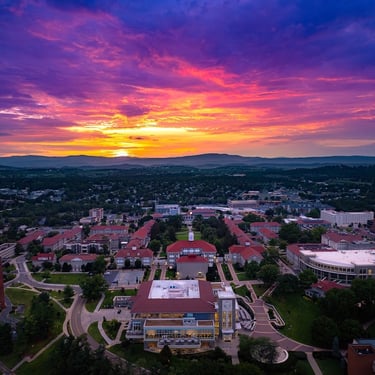
I actually started college in Virginia — JMU, in Harrisonburg. Great school. Great campus. But at the time all I could feel was: I’m still here, and ‘still here’ felt like standing still. So I bounced to UNC after two years.
I remember my high school coach before home games — Coach Meier — getting really still, lowering his voice, and telling us the ground we were about to play on used to be a Civil War battlefield. The Battle of Chantilly. Men fought and died right here.
And I remember thinking… cool, anyway.
Not because I didn’t believe him. I just couldn’t feel it.
The Virginia he was selling — battlefields, founding fathers, Williamsburg — didn’t overlap with mine. Mine was locker corners and lunchbox smells and knowing which friends’ moms would let you stay out late. His was monuments. And monuments never did much for me.
And the funny thing is, even while I was busy ignoring Virginia — acting like it was just the part you pass through — Virginia kept handing me things I didn’t know what to do with.
Growing up, the lowest-effort thing to rally around in Virginia was the Washington Redskins. They represented D.C., sure, but they practiced in Virginia. Redskins Park was within walking distance of my house.
My best friend at Oak Hill for a couple of years — Brooks — his dad was on the team. Third-string quarterback. I was literally having sleepovers at an NFL player’s house.
And I wanted no part of it.
I was a Bears fan. Chicago. My dad’s city. Everybody around me was draped in burgundy and gold, and I’d rather be wrong alone than right in that crowd. Third-string quarterback be damned.
My senior year, we won the state football championship. It was so cold and rainy that day — about as bad as weather can get without a full blizzard — that after we won, we barely celebrated on the field. We got on the buses as fast as possible and rode back to school still in full, wet, muddy uniform glory.
Once we got back and the celebration began, the pride was still specific. Our school’s first state title ever — and I’m pretty sure we were more hyped about being ranked #1 in the Washington Post. Virginia was just the bracket.
Then there was basketball.
In high school, a couple of friends and I would take ourselves to the Kenner League at Georgetown in the summers. If you know, you know — pro-am runs in McDonough Gym. College guys, pros, everyone jammed into a sweaty box to watch people play for nothing and everything.
When I was about 14, Allen Iverson was there.
This was right after the whole bowling alley thing. After the pardon. After Georgetown signed him and the entire country had an opinion about it. Iverson was already the most talked-about player in America, and he hadn’t even played a college game yet.
And we just…went.
No tickets. No rope. Just hop on the Metro, show up, and watch this kid from Hampton — this kid from Virginia — do things to grown men that didn’t seem legal.
I knew he was from Virginia. I just didn’t think anything of it. It was more like: oh yeah, people like that are around.
My friends who went to VCU used to hang out with Mad Skillz because he worked at the campus parking deck. Not a “celebrity sighting.” Just…. a guy from here.
That was the pattern that never clicked: Virginia had people who felt accessible. Not carved into history like distant legends. People you could bump into.
And because they felt close, I never treated it as a source of pride. It was just normal background, like something you don’t photograph because it never registers to you that it won’t just always be there.
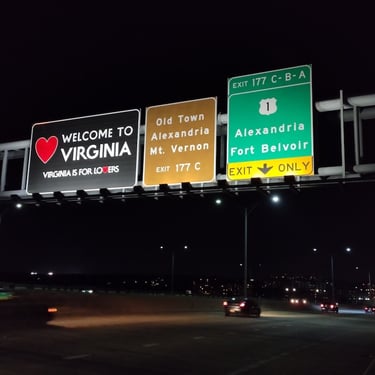
I was 22 or 23 the first time I bought anything that referenced Virginia at all. A t-shirt: “Virginia is for Lovers.” I grabbed it from a kiosk at Military Circle Mall in Norfolk, when I was visiting a friend from UNC who grew up in Hampton.
And I think the only reason I bought it was distance. I’d been living in North Carolina long enough that Virginia started to look different from the outside. The logo looked kind of cool. Not really pride so much as something I could put on without having to explain myself.
It was such a small thing, a mall t-shirt. But it might have been the first time I voluntarily claimed Virginia as mine.
Not D.C. Not my dad’s Chicago. Not my school.
Just: I’m from here.
And I didn’t fully understand what was starting to shift. I just liked the shirt.
***
"It's funny, growing up in Virginia, I spent the first half of my life there, but never as an adult for real for real. After college I moved to other states and cities. But when I think about Virginia, when I tell people I'm from Virginia actually, I always clarify which part. I specifically say you'll be like: the DMV, DC, Maryland, Virginia, Northern Virginia, Fairfax County… I'm almost anxious when I do it, not anxious, but overexcited to explain, because Virginia is very different depending on what part you're in. Let me just say that. So being from Northern Virginia, being a part of the DMV, is very different from being in the state's capital in Richmond, or being further in the Tidewater area, in the 757 area, or being in southwestern Virginia. It's very distinctive, and your response is going to be different depending on who you talk to, depending on where they live and where they spent their time in Virginia. So that's number one. Another thing about growing up in Northern Virginia that I wasn't even fully made aware of until I lived in other states and highly populated cities was that Northern Virginia is very diverse. I always considered it to be a melting pot: so many different cultures, various African immigrants, Asian immigrants, European immigrants, all living in the same communities everywhere. And that was normal life, and I didn't really notice that being distinctively great until I moved to other areas that were a bit more segregated."
“I know you're talking about VA but it'd be hard for me to discuss VA and what it's meant to me without talking about the concept of the DMV. I don't know what year it started, but I think Wale should be credited for it. I'm sure it came out before he started talking about it, but you know, this connectedness of the DMV: DC, Maryland, and Virginia, and what that actually means. If you're from VA, and you're part of the DMV, that's really like maybe Loudoun County, definitely Fairfax County, Arlington, Alexandria, and parts of Prince William, I would say, but not really too much else in VA, I would say. Obviously all of DC; it's only 10 square miles, that's the center. And then Maryland, a lot of counties in Maryland, like PG County, some parts of Montgomery County. So anyway, there's this centralized area that's the DMV, and it's a beautiful concept of togetherness, but the reality is it's pretty separate still. I think some parts of Maryland and DC interact more, but I know a lot of people from each part only slightly mess with the other part or really go into it or venture into it. The concept is good. I'm sure there's some small swash of people who really, really flow between the three areas, but mostly it's that people still do kind of stay to their one sector or maybe two sectors. I know a lot of people from Maryland who never go to VA, and D.C. who never go past Pentagon City. Maybe they go to Arlington if there's some kind of D.C.-Maryland-esque type event. But mostly they stay to the city and they stay to Maryland. I know a lot of people in VA don't go to Maryland very much; they go to DC to go out or for sightseeing or because a friend lives there, fresh out of college or something, and then mostly fall back to VA."
***
Neu-Isenburg. That’s the name of the town. Not even Frankfurt city. A suburb, a 10 or 15 minute tram ride south. The kind of place you’d drive past on your way to the airport.
The venue held maybe 2,000 people. And even though I’d gotten mine, tickets were still available at the door. For D’Angelo. I couldn’t process that.
You have to understand — D’Angelo had been gone. Not “taking a break” gone. Not “working on a new album” gone. Gone gone. Fifteen years since his last album. No known tours. No interviews. No public anything. I honestly didn’t know if he was still making music. I didn’t know if he was okay. Brown Sugar came out when I was in high school. Voodoo dropped while I was in college. Both of those albums lived in me. And then…silence.
So when I saw that poster outside the station in Frankfurt, it wasn’t just “oh cool, D’Angelo’s in town.” It was more like seeing a ghost’s tour schedule.
I walked into that room not knowing he’d made a new album. Black Messiah. I learned it existed by hearing it performed live. That’s a sentence I still can’t believe is true.
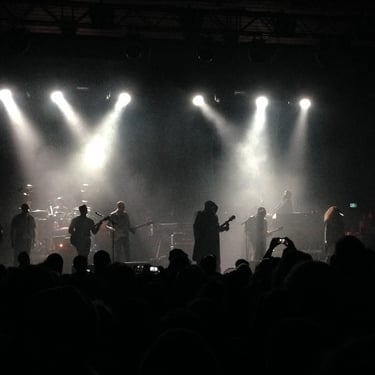
He played for two and a half hours, maybe three. Way beyond what anyone expected. The band was unreal — Pino Palladino on bass, and if you know who Pino tours with, you know what that means. The room was small, and smoky, the lighting gave everything this black-and-white feel, and D’Angelo, with a bandana to the side and a black cape, looked like the album cover come to life. You could feel the music in your chest.
And somewhere in the middle of it, I kept thinking: D’Angelo is from Richmond.
He grew up in a Pentecostal family and was playing organ in church as a kid. And he was the kind of artist that other artists study. Your favorite musician’s favorite musician. The guy that Questlove and Erykah Badu and Prince talk about with reverence. And he’s from the same state where I used to complain about being bored.
That thought just sat there, getting heavier, while the music kept building.
And once I saw it, I couldn’t stop seeing it.
Allen Iverson. I’d watched him in summer league as a kid — just a teenager from Hampton, smaller than the guards on my own high school team, who happened to be the best athlete anyone in that gym had ever seen. Between that gym and the NBA Hall of Fame, something else happened.
AI didn’t just change basketball. He changed what an athlete is allowed to look like.
The cornrows. The tattoos. The sleeve. The headband. The way he dressed for press conferences. Before Iverson, the NBA had an image it was comfortable with — clean-cut, corporate-friendly, tucked in. AI showed up out of Hampton, Virginia — and said: no.
He was killed for it. I remember. He’s a thug this, he doesn’t respect the game that. The league literally created a dress code because of him. The guys on TV questioned his character based on how he looked. And he just… kept going. Kept being AI. Kept crossing people over, stepping over them when they fell, and playing harder than anyone else in the building.
And here’s the thing that gets me now: walk into any stadium in Europe today. Look at the footballers. Full sleeve tattoos. Both arms. Neck. Hands. It’s completely normal. It’s not even rebellious anymore — it’s just what athletes look like.
Iverson didn’t mean to, but he absorbed all of that friction so the next generation wouldn’t have to. And he did it from Hampton.
Then there’s Pharrell.
Everyone knows Pharrell, but not everyone knows where he’s from. Him and Chad Hugo — the Neptunes — rewired pop music from Virginia Beach. And now he’s the creative director for Louis Vuitton. A guy from Virginia running the most iconic fashion house on earth.
Virginia Beach doesn’t look like Paris. It doesn’t sound like Paris. But somehow it produced someone who Paris decided is the future.
And Pusha T.
I first heard The Clipse when they came out in 2002. “Grindin” — that beat with no melody, just percussion and menace. They were cool, Malice could flow. I liked it, moved on.
But Pusha kept getting better. Album after album, year after year, he kept sharpening. And at some point, I found out that both of them went to Salem High School in Virginia Beach.
I found that out because an ex-girlfriend had gone to Salem too. She knew Pusha T… mentioned it one day, casually, like it was nothing.
I remember thinking: of course. Of course he’s from there. Of course you knew him. Because that’s how Virginia works. You don’t find out through a documentary or a billboard. Someone you know just… knew them. Proximity. Always proximity.
Then I saw, just a few months ago, the video Pusha and Malice made at the Vatican, The Birds Don’t Sing. Something about watching two guys from Virginia standing in the middle of all that — the Vatican! — it hit different when you’re overseas yourself. It made Virginia feel massive from a distance in a way it never felt up close.
I walked out of the D’Angelo show and the cold hit me again. My friend and I didn’t say much at first. We just walked. It was the best kind of quiet, after something fills you up so completely that words would make it smaller.
And in that quiet, I started putting it all together. D’Angelo, Richmond. Iverson, Hampton. Pharrell, Push, Virginia Beach.
This one state — this state I used to think of as the part you drive through — had shaped global music, global sports, global fashion. Not by announcing itself. Not by putting up a monument. Just by producing people who left and became undeniable.
I was standing there in a dead quiet suburb of Frankfurt, waiting for the 17 Tram back to the city, finally seeing it.
***
“And all of this, right…seek your fortune, going West. It all started in Northern Virginia. Some of my best friends in the world come from there and are still there. First loves, first heartbreak. A lot of first everything happened in Virginia. What I can say, for me, is that every time I go back I am reminded how thankful I am to have been in a place where I had friends from all walks of life. Poor, middle class, upper middle class, rich, smart, just-getting-by, kids who came from homes that valued education, kids who were the first to graduate high school in their family. That area is so rich, at least it was when I was there, so rich in influence and opportunity. I am forever thankful that that is where I grew up, where you could ride your bike on a bike trail to your friend's house, or play pickup basketball on a blacktop. Where you knew which restaurants were giving out, like, the best pasta or the best chicken wings, or you name it. Actually scratch that, because the restaurants in Northern Virginia were quaint and there weren't a lot of high fancy places to go where we grew up, but they were good enough, right? They were good enough. If you graduated from Virginia, if you grew up there, you always knew—you should always feel—that you were good enough, and that is something that a lot of places don't offer. You could stand tall there because you have people to stand next to that will lift you up, and that you were proud to stand next to. Northern Virginia, Nova, DMV, Fairfax County, Chantilly, Virginia. South of the Mason-Dixon line. Not a stone's throw away from the Battle of Manassas or Bull Run, seat of the Confederacy. For a Black kid and African American first-generation child of immigrants, it'll forever be home. I'll forever feel comfortable and uncomfortable at the same time."
***
So here’s what I didn’t see until I was standing at a tram stop in Germany, freezing, replaying a concert that wasn’t supposed to exist.
There’s the kid in the hallway, sliding between the Kims and the Lees, learning to read a room without making it weird. Going to friends’ houses, smelling something unfamiliar, and watching ‘funny’ become ‘normal’ by the third visit.
There’s the young adult who can’t figure out what to do with where he’s from. Who says “D.C.” at parties. Transfers out of state. Won’t root for the local team even when his best friend’s dad played for it. The guy who buys a t-shirt in Norfolk and doesn’t know why it feels like a breakthrough.
And there’s the guy in Germany who sees D’Angelo and suddenly can’t stop connecting dots he’s had in front of him for twenty years. Iverson. Pharrell. Push. All from this one state that never bothered to brag about it.
Three stories. But they’re not three things — they’re one thing.
Virginia taught me how to notice.
Not in a classroom, and not through a pep talk about battlefields. But through hallways and carpools and living rooms that smelled like someone else’s normal. Through the daily, completely mundane act of being around people who aren’t like you and learning to pay attention instead of flinching.
That skill — noticing — is what I carried into every city I’ve lived in. Tokyo. New York. Sao Paulo. Amsterdam. Dubai. Every episode of this show is about a guy who walks into an unfamiliar room and tries to read it. That instinct didn’t come from those cities. It came from Virginia. I just didn’t know it, because Virginia was too close to see.
That’s the blind spot. The same skill set that let me recognize everything else made me blind to the place that built it. When you grow up trained to notice what’s different, you stop noticing what’s yours.
I couldn’t see Virginia as a single, proud, claimable thing because Virginia never presented itself that way. I couldn’t even tell you what the state flag looks like. Virginia never handed me one. It just kept showing up — in hallways, in gyms, on stages — and let me figure it out at my own pace.
Which, if you think about it, is the most Virginia thing possible.
D’Angelo didn’t announce he was back. He just showed up in a German suburb and played for three hours.
Iverson didn’t ask for permission to change the culture. He didn’t ask anyone to follow him. He just walked in looking like himself, without apologizing for it or owing anybody an explanation, and dared anyone to stop him. And guess who caved.
Pharrell didn’t pitch Virginia as a fashion capital. He just kept standing out and let people trace it back.
That’s how Virginia works. It sends things into the world quietly and lets you notice when you’re ready.
Some places teach you to belong. Virginia taught me to recognize.
And sometimes you don’t recognize home until you see it from far enough away — standing in the cold, in a town you can’t pronounce, waiting for a tram, with a flag in your pocket you didn’t know you’d been carrying all along.
***
“Bro, the real estate prices are out of control. The traffic is insane. I know there are studies and all sorts of infographics and different things that talk about the different areas in the country between L.A., Atlanta, and the DMV or D.C. area in the traffic. But it is serious business if you live out here. You could be 20 miles from work and it'll take you an hour and a half to get there, no question. Places that are 20, 25 miles away feel like they're a world away. For me to get to Charles County in Maryland from Alexandria, which is like 28 miles, maybe 30 miles, it could take me one hour, t could take me one and a half hours, it could take me near two hours, depending on traffic. The traffic patterns are wild because it's really hard to negotiate when it's not traffic time. It feels like it's always peak time. We got these lanes where you can just pay using your E-ZPass. It's not $2 or $3; it's $15 or $20 to avoid an 8-minute slowdown. We thought it was insane when it very first started, but now these paid HOV lanes, it's just part of the regular ecosystem. You just know it's the cost of doing business. Hey, today I'm running late, I'm gonna pay $25 extra to get to work. It's an insane thing."
***
Hey guys, Steven again. I was so excited to do this episode, and I claim Virginia so hard now. I live in Tokyo and VA doesn’t have the name recognition here as California or New York, so I always tell people it’s like the “Shizuoka” of America. Shizuoka is a prefecture here, not too far from Tokyo but also not particularly distinctive on its own, definitely not in your face, but it’s beautiful, it has mountains, it has beaches, it has a distinct culture so I think the metaphor fits.
As always, thank you to the Virginia artists who provided the background music for these stories. D’Angelo was one of the best ever, but I think Virginia has punched above its weight in terms of the impact it’s had on global culture.
More importantly, thanks to my friends from Virginia who contributed their voices and perspectives. I didn’t have to go to any strangers this time, so I really appreciate your support.
This is the end of Season One of EveryCity Whispers, because I’ve run out of places that I personally have ever called home. I don’t want to go dark for an extended period of time, so I’ll probably do a few recap episodes, less production, maybe experimenting with some different ideas. I’ll look forward to your feedback on those.
And looking forward, as I keep saying, this is going to be about you. So regardless of where you live, if you have some insight about how your city has shaped you, or any interesting people in your orbit I should talk to me, please do reach out.
If you enjoyed this episode, tell a friend who might like it too. Leave a review, like, comment….let me know you’re out there. It means more than you might think.
For the music, all artists & songs – and the Spotify playlist – are on the Virginia episode page at EveryCity Whispers dot com – link in the episode description. I’m posting short clips every day to Instagram, TikTok and YouTube – @ Everycity Whispers for all three. Show some love.
And if you want to reach out for any reason, my email is: Steven, with a 'V', @ everycitywhispers. Dot com.
Thank you for listening to the Virginia episode of EveryCity Whispers. Until the next one…remember: you don’t have to move cities to move yourself forward. Cities don’t shout, they whisper. If you stay curious and listen closely, you’ll hear them.
***
TRANSCRIPT
EVERYCITY WHISPERS
KNOW THE WORLD. KNOW THYSELF.
© 2026. All rights reserved.