
CAROLINA 🇺🇸: The 25-Cent Key to the Dean Dome [Episode 7.0]
Carolina teaches you that fear writes the most complicated version of every story. A podcast episode about UNC-Chapel Hill, identity, insecurity, and becoming yourself in drafts.
CORNERSTONE EPISODES
12/30/202523 min read
A college town is a place to practice—to improvise and try on different selves before you’re ready to make anything official.
I moved to Chapel Hill, North Carolina to study journalism, and over the next few years I learned that my own insecurity was writing the most complicated version of every story.
This episode is about bluffing my way into the Dean Dome and finding out the simplest explanation is almost always the quiet truth.
THANK YOU
Anne, Jennifer, Aubrey, Reggie, Matt, Chris, Reubin & the lovely folks of the r/chapelhill and r/unc communities — for your thoughts and voices.
And to the artists below for helping me tell the story of North Carolina. Some great music from the Tar Heel State (and a bit from South Carolina, too!).
TRACK LIST (in order)
Here Comes Carolina - The Marching Tar Heels (UNC band)
Hark the Sound/I'm A Tar Heel Born - The Marching Tar Heels
Middle Child - J. Cole
Deep River Blues - Doc Watson
My Favorite Things - John Coltrane
Forever and Ever Amen - Randy Travis
Dollas Circulate (instrumental) - 9th Wonder
One Last Dance - Baby Rose
Crucify - Tori Amos
Power - Rapsody ft. Kendrick Lamar & Lance Skiiwalker
The Devil Went Down to Georgia - The Charlie Daniels Band
Atomic Dog - George Clinton
Hit Em Up Style - Carolina Chocolate Drops
Monk's Dream - Thelonious Monk
No Hard Feelings - The Avett Brothers
Giving Her Away - Luke Combs
Ordinary Pleasure - Toro y Moi
Come & Talk To Me - Jodeci
Die Young - Sylvan Esso
Brick - Ben Folds Five
Crying Over Nothing - Indigo De Souza
Springsteen - Eric Church
Triptych: Prayer/Protest/Peace - Max Roach
The Way You Do It - Little Brother
Feeling Good - Nina Simone
Carolina In My Mind - James Taylor
'74-'75 - The Connells
The Andy Griffith Theme
Home - Daughtry
Sand - He Is Legend
Raise Up - Petey Pablo
(Full transcript below photos)
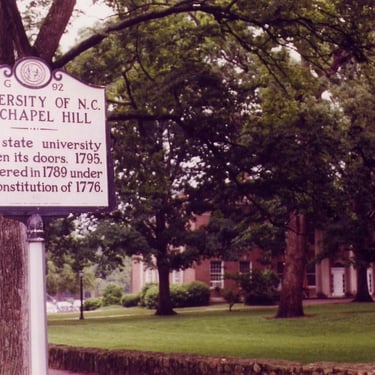
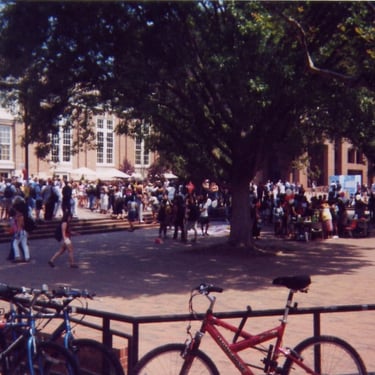
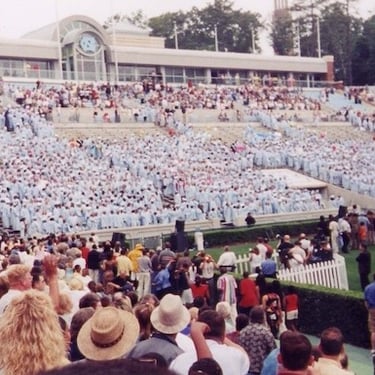
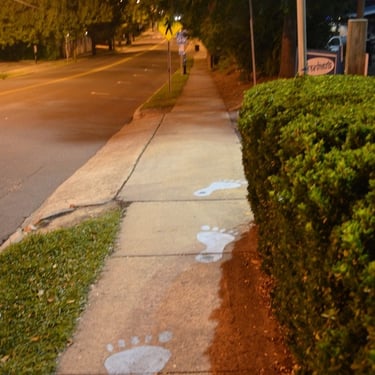
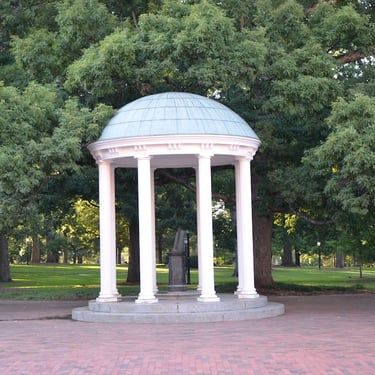
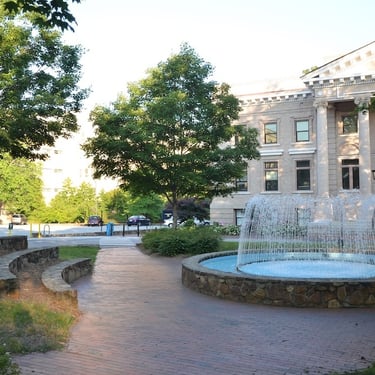
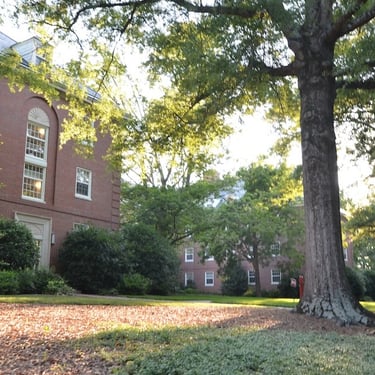
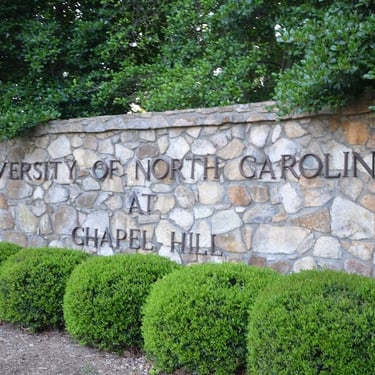
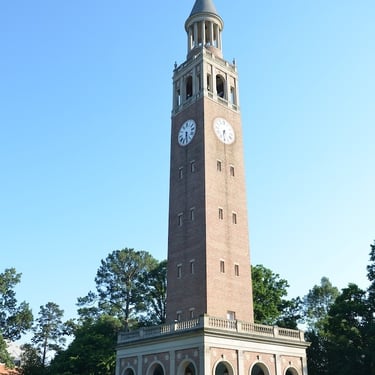
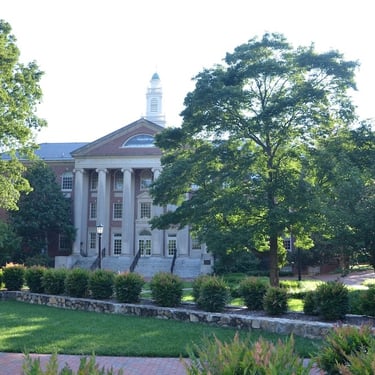
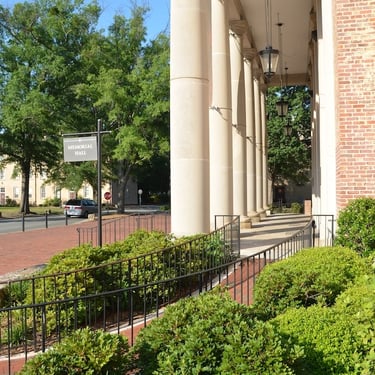
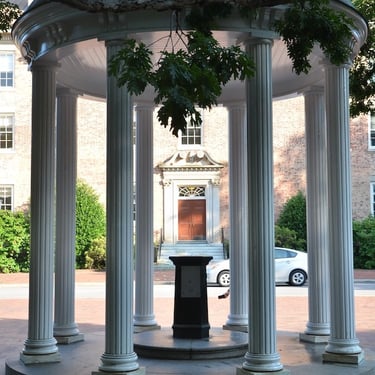
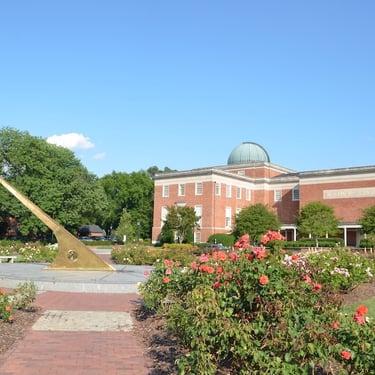
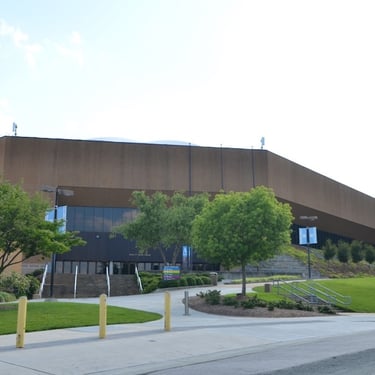
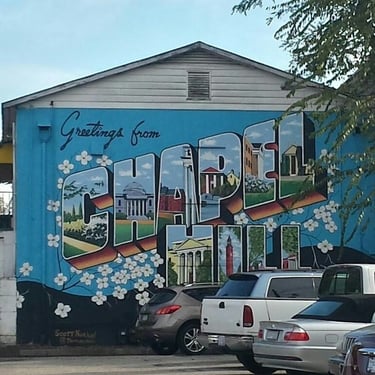
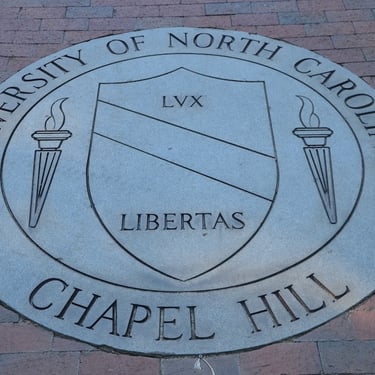
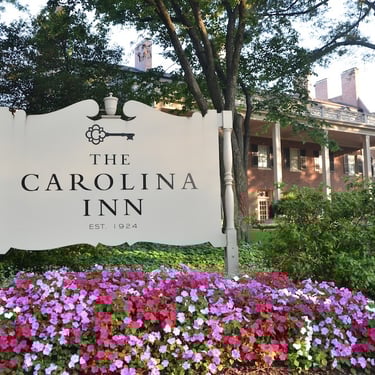
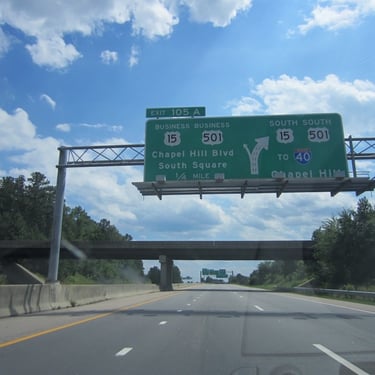
My dad’s hand was shaking. Mine wasn’t. I walked him straight past Dean Dome security with a press badge I’d printed at a campus coffee shop. He didn’t say a word. Neither did they.
We step onto the floor and head to press row. Eight minutes until tip off–UNC Duke–and the lights hit us like a spotlight. My dad whispers: “We’re gonna get arrested…”
I whisper back: “Only if you act like it.”
The building is vibrating. A total zoo.
Students painted Carolina blue from toe to head, like someone dipped them and forgot to pull them out. Camera crews slide around the baseline like predators. The band is punching brass into the thick air. My Dad keeps looking around, like someone’s going to tap him on the shoulder and say “sir, come on…we know.”
But no one does. We slide into our seats – first row on the baseline, just to the left of the basket – like we’re supposed to be there.
The players come jogging out for their final layup lines, but I’m distracted. I can’t stop sneaking side-eye at the man who spent my childhood teaching me how to drive, how to hit a baseball and shoot a basketball, how to not overthink everything… now gripping the edge of the press table like it’s a flotation device, while I sit next to him feeling invincible, wearing a lanyard that cost 50 cents to laminate like body armor.
The next two hours are a blur. But man, what a blur.
And it wouldn’t be the last time I ended up someplace magical I was definitely not supposed to be. I was 19, driven only by instinct and overconfidence. But even though I went to class every day, this was the first real lesson Chapel Hill taught me:
You don’t have to know what you’re doing. You just have to act like you can figure it out.
That’s the magic of a college town. Everyone is half-formed. Everyone is improvising. Everyone is pretending to be a version of themselves they haven’t grown into ye
This is EveryCity Whispers, a show about the quiet messages cities send and how they shape who we become.
Not the tourist-version of a place–-not the one you see from a luxury hotel or the back of an Uber. The version you only get by living somewhere–long enough for it to get under your skin, long enough for you to notice how it changes you.
Travel helps us understand the world. This show helps you understand yourself inside of it.
I’m Steven. I’ve lived in five countries on five continents. And before New York and Dubai and Amsterdam and Sao Paulo and Tokyo, I went to school in the most college-y college town in America: Chapel Hill, North Carolina.
I started this series telling you how the world changed me. For the next few episodes, I’d like to show you who was being changed.
Before we hit the airport again, we’re going back to the roots — the places where the draft version of me was being sketched in pencil, erased, and sketched over again.
North Carolina wasn’t where I became myself. But it was where I started learning how to become.
***
"North Carolina has always been a special place for me. It's a place that I’ve spent a lot of time both as a child and as an adult, so I have a lot of memories here. When I was young I used to travel to the eastern part of the state, to Pender County, to spend time with my grandmother, my cousins and family. Pender County didn’t have all the luxuries and innovations that I was used to growing up in Northern Virginia. It was a lot of fields. It was a lot of people who maybe didn’t have a lot, but they worked hard for what they had and they were proud of what they had. But one thing I really appreciated every time I came here is that everywhere I went, I was family. It was a bunch of people who would look after me, they would feed me, they would take care of me, they would discipline me. Whatever was needed at the time, and what was best for me, they made sure they provided that. And it was that notion of servitude that I learned from them and from everyone in that part of the state, and I appreciated that because I was able to take that and hold onto it and apply it to when I finally grew up and became an adult and started my own family."
***
When you’re 19, you don’t realize you’re living inside a strange kind of ecosystem – part incubator, part movie set, part emotion lab.
A college town is the only place on Earth where just about everyone around you is technically an adult… but nobody is actually running adult software yet.
You’re surrounded by thousands of people in the exact same in-between state: old enough to make decisions that can genuinely impact your life, young enough to make terrible ones your parents hope won’t, and confident enough to pretend both were intentional.
At eighteen, nineteen, twenty…your identity is still wet paint. You try something on Monday, scrape it off by Wednesday, and start all over again on the weekend. And even if it doesn’t feel like it sometimes, nobody’s judging you because everyone else is doing it too.
In most of the places I’ve lived, the city pushes you. And yes, that has something to do with me being at different life stages when I moved to Tokyo, or Amsterdam, or New York…but it’s also the places themselves. They demand some level of competence from you. Output. They want to see a version of yourself that you can defend.
Chapel Hill was the opposite. It asked me to try. To play around with things. To stumble through early versions of myself without anybody really paying attention.
Most cities sharpen you. College towns soften you. Not in a weak way, but in a…flexible way. They give you room to stretch, to improvise, to practice being a grown-up before you’re actually expected to be one.
Of course you don’t process any of this while you’re in the middle of it, but Chapel Hill is where I learned one of the quiet truths of growing up: that you become yourself in layers. In drafts. In contradictions that don’t make sense. In all of the little worlds you play around in before the real one arrives.
That’s what college towns do: they mash together people who would’ve never met, like kids from rural North Carolina who treated being there like a birthright and would make you laugh with the way they’d disgrace Spanish 101 words, and kids from out of state who’d damn near won the lottery just to be accepted. They toss you all together in a dorm and say “alright, have fun!”
Everyone was learning a different language – some literal, some emotional, some social – and everyone was butchering it equally. It was messy and…charming, in a way. It created this shared, forgiving atmosphere that you don’t get in real cities. Everyone felt like a beginner because everyone was a beginner, which made it a bit easier to be a beginner.
And that “beginner energy” became clearest to me the August I arrived on campus and found that the guys I had heard about from ESPN were the same guys I’d be brushing my teeth alongside in the dorm bathroom down the hall. This is UNC, people – for my global listeners, that’s basically the NBA’s farm system. Guys who seemed larger than life on TV, playing in the McDonald’s All-America game.
But here, the distance between “ordinary” and “legendary" is about eight feet – the width of the dorm hallway. You grow up thinking star athletes are carved from stone, surrounded by security, hovering somewhere above the rest of us.
And then you get to Chapel Hill and find out that they, too, are 19. Missing socks, borrowing your PlayStation controller, and arguing over who called ‘next’ on NBA Live. If you thought college had a hierarchy, it evaporates fast. It rewires how you think about status, talent…possibility.
It teaches you that “special” isn’t a category… it’s a context. Change the room, and people change with it. And for me, that collapse – that sudden leveling of the people I thought were giants – opened up a whole new way of seeing myself.
Because here’s the twist: I wasn’t even a Carolina fan. This is a place where sports fandom runs deep. I mean, people found out that I was a Maryland basketball fan, because I had always been into them growing up, and they’d be angry. Like “why do you even go to school here then?!?”...as if school’s purpose is to serve being a fan.
But one of those little scuffles – some harmless trash talk – ended up opening the door to one of the strangest, funniest, most formative chapters of my life in Chapel Hill. It started with NBA Live in the dorm lounge. It ended on the court of Cameron Indoor Stadium…the sacred basketball gym of our arch enemy–Duke University–just a few miles away. And everything in between taught me a lot about ambition, belonging, and the weird things we do when we’re still figuring out who we are.
***
"Chapel Hill was the first place that I was around people who came from a vastly different background to me (White, Protestant, raised in a very evangelical and conservative area). I met people with different religious beliefs, different political beliefs, who were raised richer than me and poorer than me. It expanded my horizons in the best way possible. I came to UNC a slightly right-of-center Christian; I left a very left-of-center atheist, which I still am to this day. I became committed to social justice and advocating for those who are most in need in our society, which I don't think I would have discovered as soon as I did had it not been for my time at UNC."
“Well North Carolina has been my home since I was a baby. And even though I’m right across the border now, I don’t claim South Carolina, since I’m basically in a suburb of Charlotte. I don’t know anything of the South Carolina experience. I guess it’s a much slower and let’s say old fashioned kind of state. On the North Carolina things, the best thing about it is just like the natural beauty, from the mountains–that’s one of my favorite places to go to. Asheville’s an awesome city, even smaller towns like Blowing Rock, Chimney Rock, Boone. So many places there. Just exploring the Appalachian Trail, taking in the beauty is just awesome. You don’t get that everywhere. And then within the same state are some of the most amazing beaches as well. Just having the chance to be within hours of either the mountains or the beach is something that not everybody gets to experience, and allows your vacations to have some variance, depending on your mood."
“Wow, I can’t say enough about North Carolina. In some ways, North Carolina has always been a part of who I am. I should probably start by saying that I grew up in Hampton, Virginia, but my dad is from North Carolina, so I spent a lot of time in the coastal area of North Carolina. The southeast coast, in the Brunswick County area, near Wilmington and Myrtle Beach, South Carolina. So I went to my grandparents’ house there a lot as a kid, hung out with cousins, aunts, and uncles there as a kid. So it was always a special place for me. And then as a young adult I moved to Chapel Hill, NC to go to undergrad. So I’m a Tar Heel. One of my favorite places in the world is Chapel Hill, NC, and it really helped shape the person that I had become. I went there as a teenager and came out as a young man, and so it’s always been a special place to me–Chapel Hill–and I still go back, a lot, even now as an adult in my forties. And then I’ve been a lot of places after I left undergrad. I went back to Virginia, and then to DC to go to Georgetown, and then to the West Coast where I lived in the Bay Area. And all that has brought me back to North Carolina. I moved here in 2014 with my fiancee at the time, my now-wife, and we’ve been here ever since. It’s interesting that all those travels brought me back to this state, and we love it here. It’s a special place."
***
It turns out, that day at Duke wasn’t the only time Chapel Hill let me wander into a world I had no business being in. In fact, I’d been practicing for Cameron Indoor long before any UNC player ever tossed me a gym bag.
Because here’s the truth: I didn’t just become resourceful in college. I became resourceful about college. I quickly came to see it not just as a pathway to something else, but as a game I could learn and hack.
The Daily Tar Heel – the student newspaper everyone respected – didn’t pay. Carolina Blue, a flimsy, slightly embarrassing magazine for only the most die-hard of sports fans… did. Forty bucks per article.
At nineteen years old, forty bucks is the difference between eating ramen (not the real ramen I’m spoiled eating in Japan, but the 20 cents a pack, MSG-rich American college student ramen)...and something that isn’t ramen. Like a Cook Out tray and an Oreo shake. So I said yes. And without realizing it, I’d stumbled into the most valuable education Chapel Hill would give me:
I learned how press credentials worked.
Who to email. What subject line sounded official. Which sports information directors rubber-stamped everything. Who never checked IDs at the door.
It wasn’t investigative journalism. It was administrative gymnastics. But administrative gymnastics will take you farther than talent when you’re 19.
And once I understood the system, I made a quiet discovery – dangerous knowledge for someone of my age and lack of fear: no one verifies anything.
There was this artsy student magazine on campus with a cool, mysterious name. No sports coverage. No circulation to speak of, aside from a pile of them laying around the Student Union. Nobody, and I mean nobody, read it.
Which made it perfect.
I borrowed the name, invented a staff email signature, and sent credential requests to Duke, NC State, Wake Forest, UVa. Anywhere my second-hand Ford Taurus could get me on less than a tank of gas.
Approved.
Approved.
Approved.
Every single time.
I printed the badges and laminated them in the magic journalism catch-all room I found in the basement of Carroll Hall, clipped them into a lanyard, and suddenly I could walk past ushers, security guards, media check-ins…
And not once did anyone stop me.
The first time I walked into Cameron Indoor Stadium for a real Duke game, credential swaying on my chest, the whole world smelled like varnished wood and violence. UNC’s Dean Dome is basically an NBA arena. But Cameron is tiny, and louder – like a high school gym swallowed a supernova. The bleachers shake. The walls talk and breathe. Everything feels like it’s happening six inches from your face, because it basically is.
I remember thinking:
“I should not be here”...followed immediately by “...but I think I belong.”
That became the theme of my junior year: rooms I wasn’t supposed to be in, but figured out how to find my way into.
Which brings us back to NBA Live in the dorm lounge.
The lounge was this sweaty, fluorescent-lit democracy. One console. One TV. Six controllers, but only two that worked right. A rotating cast of 19-year-old gods stumbling in in house shoes, half-dressed, arguing about who had ‘next.’
Some were UNC players – who’d be playing in the NBA a year or two later – but that didn’t mean shit here. Status dissolves fast when someone’s down 12 points in the third quarter.
I wasn’t even a Carolina fan, like I mentioned earlier. I was into Maryland. Everyone knew, I didn’t hide it. So I’d get heckled by all of the kids on my floor, basketball player or not. Most of it was good-natured, or at least I thought it was.
But there was this one guy, who was on the team but didn’t play much, who’d always look at me like I personally insulted him and the entire state of North Carolina. He’d give me this tight-lipped squint that I could never quite get a read on.
I was cool with most of the guys, but I had this whole theory in my head about him that he hated me. I figured he’d be the one to try to use his pull with the basketball program to derail my journalism career before it started.
And then one Saturday in May, just before the end of the semester, he walks up to me, looks me dead in the eyes, and says: “yo, you got a car?”
“Yeah.”
“Cool, we’re going to Duke.”
That was the whole conversation.
Ten minutes later, I have 20 feet of UNC basketball players crammed into my Taurus, which shook at speeds over 55 miles an hour, driving down Highway 15-501 toward Durham. We get to Cameron, the guys hop out and dap up a couple of Duke players, and the next thing you know, I’m inside. Again. In a room I have absolutely no qualification for. Filling in the 10th spot in a pickup game with at least 4 guys who will go on to play in the league.
Cameron looks surprisingly bigger this way, without fans, camera crews, and press tables. And nine absurdly good basketball players–plus one who doesn’t quite belong–running a private, off-the-books pickup game in one of the most famous arenas in the world.
After the run, we’re packing up to drive back to campus, and the guy I thought hated me comes over and says “I didn’t know you could play…nice run.” I hardly did anything but stand in the corner and miss 4 open three pointers, make 1, and try to not completely embarrass myself on defense, but I appreciated the love. I’d spent the past year casting him as the villain in my story, and in a 5-second exchange after a pickup game, that idea fell apart.
It was a quiet lesson, but Carolina was about to slap me in the face with the bigger, more embarrassing version, and soon.
***
“As someone who considers themselves a proud Tar Heel, having gone to high school in Raleigh, undergrad in Chapel Hill, and grad school in Durham, to later go on and live and work in nearly 90 countries. I owe a lot to the state, especially UNC-Chapel Hill–one of the first public universities in the US–because of its long history of service to others and instilling a sense of community. For me, North Carolina is a magical place where I found value and meaning in everything from quiet acts of service to louder political activism."
“I married my wife and I moved to Charlotte, North Carolina. And we did so for the same reason that most people did, which was, it seemed like a place that was calm, and there was opportunity that was here. Opportunity that felt within reach. And we made a decision to build a life here based off of that. And from that we were able to have a life, raise a daughter and a son, and be able to become a part of this community. In addition to that opportunity, there’s a calmness and a level of comfort that you experience when you first get here. I think that’s why you see a lot of people who come here–athletes for example will spend time here, or end their career here, and they don’t leave. They enjoy the city that much and they stay. So it does provide that."
“Sports and supporting UNC Tar Heels or whomever represents your town can bring a whole community together regardless of differences. Chapel Hill has taught me that sports culture taps into our ancient tribal brains… People who are normally cold or indifferent to strangers or people from different backgrounds will be warmer and relatively welcoming if you’re wearing the right colors (Tar Heel blue), rooting for the same team (Go Heels!), and share the same enemy (Go to hell, Duke!)"
***
By my senior year, I’d gotten comfortable slipping into places I had no business being in.
But there was one place where I was still completely lost: reading people.
There was a girl in my Psych class (ironically enough)...Elena. She always sat two rows over, and she had this hybrid accent – Puerto Rican family, Charlotte upbringing – that gave her words this unexpected rhythm, a twang with a tropical aftertaste.
We were in the same study group, flirted a bit, and in my head, we weren’t quite friends…but that weird college in-between space. We’d joke about the professor’s Dad jokes, trade quiz answers, say hi on campus. Nothing dramatic. Just easy, small, everyday moments that feel way bigger when you’re still a kid.
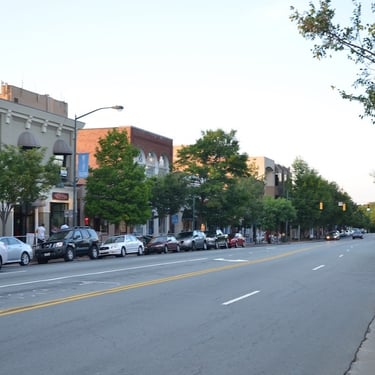
One night I’m walking down Franklin Street – that’s Chapel Hill’s main drag – and I see her coming toward me with a friend. It’s buzzing. Friday night energy. People spilling out out of bars and late-night food spots. Elena looks incredible…different from class, where she was already pretty. I’m feeling good, confident… like someone who plays pickup ball at Cameron Indoor now.
She gets closer, and I raise my hand a little — a half-wave, half-high five – already smiling.
Whoosh.
She walks right past me. Eyes forward. No flinch. No hesitation.
Not even that polite “oh hey, sorry, didn’t see you.”
Just….air.
My brain does what 20-year-old brains do best: it goes to work.
Did I say something weird in class? Did teasing her about how she’d say theory actually offend her? Was she just pretending to like me this whole time? Did I come off as trying too hard? Needy? Annoying? Why did she blow right past me?
By the time I got back to my room, Friday night fully ruined, I’d written an entire episode of Everything You Did Wrong to Make This Person Hate You. Starring me. Co-starring every awkward moment I’d ever survived.
The next Psych class, Tuesday morning, I walk in early and sit in the back. I’ve convinced myself it’d be less weird if I just…faded out of whatever this almost-friendship was. No need to force it, right? If she’s done, she’s done.
Class is about to start when someone slips into the seat next to me: Elena.
Big smile. Warm as ever. She starts talking about her weekend. I’m nodding along, not hearing a word, because the reel in my head is still playing.
Then, awkward as humanly possible, I blurt out: “are we…good?”
She freezes: “yeah, why wouldn’t we be?”
“I saw you on Franklin Street on Friday. I waved. You walked right past me.”
She stares at me for a second, then bursts out laughing in this unfiltered, Southern-Puerto-Rican kind of way.
“Oh my God. Steven. I can’t see anything past, like, ten feet without my glasses. I didn’t even know that was you. I thought you were just some guy staring at me so I looked straight ahead.”
And just like that, the entire story I’d built in my head – the story that I’d let ruin my entire weekend – disintegrated.
She wasn’t mad. She wasn’t fake. She didn’t hate me secretly. She just…couldn’t see.
We spent the rest of class doing our usual half-whispered commentary on Dr. Kaplan’s dramatic hand motions and the way he pronounced “cognition” like it was a luxury car, and it was like nothing had happened.
Except something had. Just not in the way I thought.
Walking back across campus that afternoon, I realized how fast my brain had sprinted to the most dramatic possible explanation. How quickly “no wave on Franklin Street” became “she completely hates your guts and you ruined everything.”
It was such a tiny moment. But it was the same pattern as Cameron. The same pattern as a dozen other little interactions I’d misread without even knowing it.
Chapel Hill kept handing me these small, embarrassing, weekend-tampering, oddly tender reminders:
Most of the time, what other people do isn’t about you. You’re just…standing in the frame while their own movie is playing.
As these moments stacked up – hacking press row, the mean mug basketball player, the girl who couldn’t see – the pattern became too obvious to ignore. This was the quiet truth I had been practicing all along.
***
“Living and growing up in North Carolina, I think has taught me the art of small talk. You know, living abroad now, living in Japan, I’ve learned to appreciate that more. But I feel like people in North Carolina are really good at making small talk, small conversations, and having warm, casual social interactions."
"Another great thing is the climate, that never gets too hot or cold here. And we actually get 4 full seasons. And even the winter, even though we don’t get snow, it does get chilly. But then you’ll have days of 60-degree Decembers and Januaries, so you can still go outside and play basketball."
"You get all types of topographies and landscapes here in North Carolina. The cost of living is affordable–at least it was when we first moved here. We’re big sports fans, so we have an NHL team, an NFL team, an NBA team. Some of the best colleges in the country, primarily the University of North Carolina. Secondarily, followed by schools like Duke University, NC State. Some amazing HBCUs like North Carolina A&T, North Carolina Central, Shaw, St. Aug. Everything you need is here in the state from an educational perspective. Cost of living, culture, if you like to hike, there’s so many hiking trails, waterfalls. If you like the beach, as I mentioned earlier, there’s so many of those to visit in the summertime. Even though I wasn’t born a Tar Heel because I grew up in Virginia, I am a Tar Heel. North Carolina is a big part of the fabric of who I am."
"Charlotte feels a lot like…I would liken it to a married couple that is just getting out of the honeymoon stage. They’re trying to figure out what this is going to be, they’re trying to figure out what they are trying to become. That’s a city that’s going through trying to build, trying to progress, trying to decide what identity they want to have. They are growing through a lot of development. We are starting to see more things like transit. We have a light rail that’s built and being expanded. We’re seeing more places for living going up all around. And different places, different types of communities are available or accessible all throughout the city. So you see a lot of things that you see in other cities starting to show up here as well. So it’s still trying to figure out, it’s maturing, and it’s building the identity that they want to hold for the foreseeable future."
"North Carolina changes you as a person because, well, it’s a state that has it all. And so you can explore anything and become anyone. From the Outer Banks to the Piedmont and Appalachian Mountains, you don’t have to choose when you can have it all."
***
Chapel Hill gave me a lot of good times. Even better stories. Bluffing my dad into press row at the Dean Dome, getting pulled into that pickup game at Cameron, letting a missed wave from Elena ruin an entire weekend…there’s more, too. They all felt random at the time, but they started lining up like clues to the same lesson.
At nineteen, I thought I was learning how to take shortcuts. To bend rules. How to improvise and slip into the places everyone wanted to be, and hope no one noticed.
But that wasn’t the lesson at all.
Chapel Hill was teaching me something quieter, something I didn’t have language for yet:
Most of the stories you think are about you… aren’t.
And the simplest explanation – the one that doesn’t require five layers of insecurity to be true – is almost always the right one. And funny enough, the stories that actually are about you usually don’t announce themselves loudly.
The lessons were layered. Sneaking into arenas never felt rebellious…it felt like the natural thing to do. That’s how I learned that you can start before you feel ready – that confidence usually shows up after you act, not before.
Dorm nights playing NBA Live with guys who’d soon be in the NBA were small reminders that “special” isn’t permanent, it’s just perspective that shifts with context.
And Elena? She was most gentle, and important, proof of all:
That the dramatic stories I wrote in my head were almost always fiction. I let my entire weekend collapse because I sprinted past the simplest explanation: she literally couldn’t see me. She left her glasses at home, but I was the one seeing things out of focus.
When I stack all those moments together – the silly, the sketchy, the borderline-illegal – they add up to the real whisper Chapel Hill was trying to hand me:
Fear and insecurity will always write the most complicated version of the story. Your life gets better the moment you stop believing it.
You’re going to misread a lot of life. But you learn to move through it by staying curious, not paranoid. Most of the time, people aren’t rejecting you, judging you, or plotting to take you down. Once that clicked – once I realized my own insecurity was like a terrible play-by-play man that talks way too much and doesn’t let the game breathe – everything felt lighter.
Growing up isn’t about getting better at predicting people. It’s about learning to quit the habit of inventing villains, imagining subplots, and treating every silence like a verdict.
It isn’t about perfecting yourself. It’s about learning to revise – to scratch out the bad line, write a better one, and keep going.
Chapel Hill didn’t define me or give me a finished identity I could print on a business card.
But it taught me how to start becoming one – one draft, one mistake, one small moment of misplaced panic at a time.
And the most important thing it showed me?
The world is usually a lot simpler than the stories you tell yourself about it. You start becoming yourself the moment you act like that’s true.
***
“I’ve always enjoyed my time down here. And I don’t know if I’ll live here forever, but it will still probably always be my home base, regardless of where I eventually end up."
“It’s hard to separate college town, Chapel Hill, young people….but generally I look back at my time at UNC with no regrets but definitely not my political, intellectual, emotional or social peak and that's ok. At the time I thought I went through an amazing transformation but I now realize I went from the 8 yard line to the 20."
"I don’t see my family–including my wife, my daughter and my son–ever leaving here, because we love it here so much. And so forever North Carolina. It’s played a tremendous role in the person that I was, and am, and am becoming. And so, love it so much here. Go Heels."
"There are a lot of big fish in small ponds, and when placed in a much bigger pond they are much smaller. And, it’s okay to be smaller. Success is a matter of perspective. I loved my time at UNC and in Chapel Hill. Go Heels!"
"North Carolina for me is a place of endless opportunity. And if you love the sky well, then you know that God is a Tar Heel, because the sky is Carolina blue."
***
Hey guys, Steven here. You’ve heard a lot about how cities have changed me, so I appreciate you riding with me back through the roots.
Big love to the North Carolina artists who helped me shape this episode…and I may have thrown a few South Carolina folk in there, Carolina is Carolina, right? Well, as long as you don’t say that in the Carolinas, but I’m in Tokyo, so I’m safe. But hey, good music is good music!
Thanks also to all of you who left voice notes–I reached out to my UNC alumni network but also tried to work in some enemy perspectives…even a Duke alum! You guys made this one a lot of fun.
Some homework. I’m closer to getting through all the places that I’ve lived, so I’m going to have to start finding other interesting stories to tell. If you have any thoughts on how your city has shaped you — or a friend who does — I wanna hear it. I’m starting to map out future episodes, and I want them to be about you.
If you enjoyed this episode, or any other, show some love….the “like”, the follow, the comment, or just telling a friend costs you nothing and it gives me a nice gust of wind for the sails. I’m really grateful for it.
For the music, all artists & songs – and the Spotify playlist – are on the Carolina episode page at EveryCity Whispers dot com – link in the episode description.
And if you want some daily inspiration, I’m posting short clips every day to Instagram, TikTok and YouTube – @EverycityWhispers for all three. If you want to reach out about any of the above, my email is: steven@everycitywhispers.
Thank you, thank you, thank you for listening to the Carolina episode of EveryCity Whispers. I’m going to use the Holiday break to work on the next few episodes, but I’ll keep them a surprise for now. Make sure you’re subscribed and you won’t miss it, but I’ll be back for sure with a January episode.
Until then, have a WONDERFUL holiday season, and remember: you don’t have to move cities to move yourself forward. Cities don’t shout, they whisper. If you stay curious and listen closely, you’ll hear them.
TRANSCRIPT
EVERYCITY WHISPERS
KNOW THE WORLD. KNOW THYSELF.
© 2026. All rights reserved.