
BOSTON 🇺🇸: Read What Actually Matters [Episode 8.0]
Boston doesn't explain its rules—it just shows you what happens when you miss them. A podcast episode about consequence, unwritten codes, and what New England teaches you about what actually matters.
CORNERSTONE EPISODES
1/29/202620 min read
Boston doesn’t explain itself. It corrects you.
I first learned that lesson as a kid, walking through a sleepy town on a frigid morning while visiting my grandparents. And I kept relearning it later–every time I ended up back in Massachusetts.
This episode is about reading what’s enforced, staying in play, what real expertise looks like, and why Boston never bothers to spell it out.
THANK YOU
Sarah, Ken, Charlie, Jeff, Peggy, Karen, Dylan, Alice, Jack, Angela, Kristen, Reub & the lovely folks of the Boston.com, r/bostonma and r/boston communities — for your thoughts and voices.
And shoutout the artists below for giving some Boston flavor to the episode.
TRACK LIST (in order)
Shipping Off to Boston - Dropkick Murphys
Fair Harvard - Harvard Glee Club
Cool It Now - New Edition
The Dance at the Gym: Mambo - Leonard Bernstein
Sidestep - Crown City Rockers ft. Destani Wolf
Good Vibrations - Marky Mark & The Funky Bunch
New Man Theme - Mr. Lif
Spain (Live in Montreux) - Chick Corea
I'm Different - Ed O.G. & Da Bulldogs
You've Got a Friend - James Taylor
ISIS (ADHD) - Joyner Lucas ft. Logic
Poison - Bell Biv DeVoe
Rock the Party - Benzino
Sofia - Clairo
Word Association - 7L & Esoteric
Dream On - Aerosmith
Face Off - Reks ft. Termanology
Just What I Needed - The Cars
Hangin' Tough - New Kids On The Block
Cheers Theme - Gary Portnoy & Judy Hart Angelo
Every Little Step - Bobby Brown
Sing it, Shitface - Edan
Summer Knightz - The Almighty RSO
Bladerunners - Mike Ladd ft. Company Flow
My Prerogative - Bobby Brown
(Full transcript below photos)
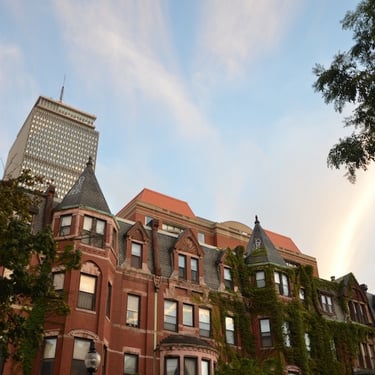
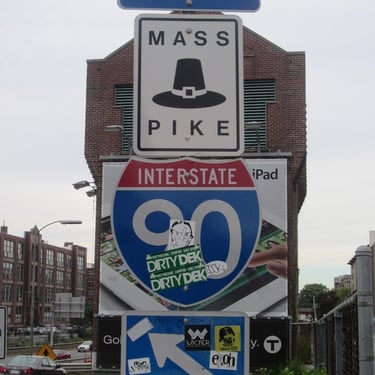
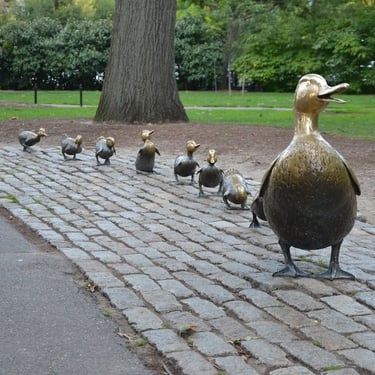
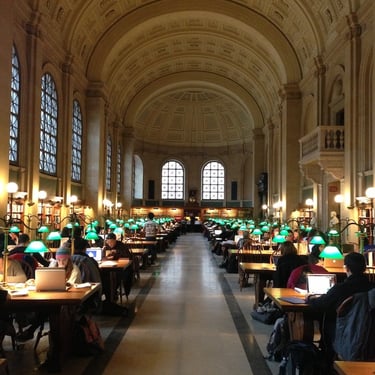
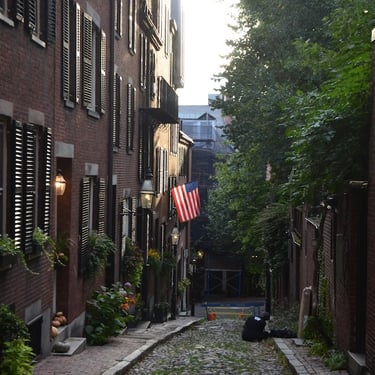
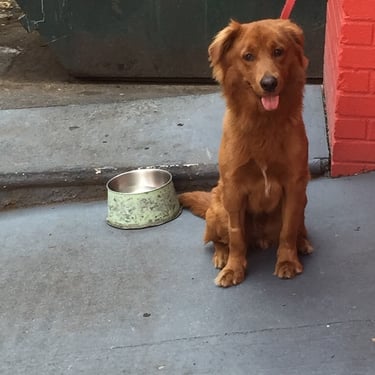
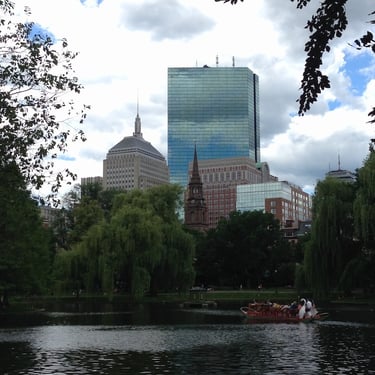
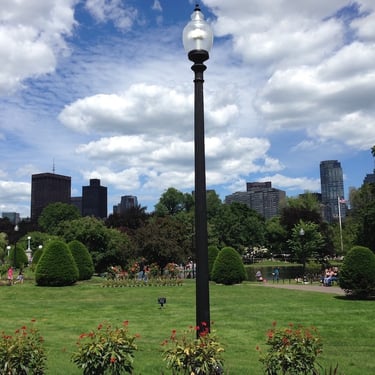
Spencer, Massachusetts. It’s Christmas Eve, late eighties. I’m 8 years old.
Yesterday it was minus-6. When it gets that cold, the air stops becoming something you breathe and starts being something that happens to you. It hits the back of your throat like a dry pill. It turns the lake down the street into a block of grey granite the town skates on.
I’m walking four blocks to Big D supermarket, because compared to yesterday, today’s 20 degrees feels tropical. It’s the only thing open and I’m bored.
I’m halfway there when I see them. Two stray dogs. No collars. Just ribs, matted fur, and breath steaming in the air. They aren’t barking yet. They’re just walking.
In Virginia, the dogs I had seen all lived behind fences. Here, they’re just out. And when those dogs’ ears perk up, my little brain short-circuits. I don’t think. I just react.
I run.
I scramble around the corner, sliding on a patch of black ice, and I see three local kids. They’re older, maybe twelve. They’re just leaning against a brick wall, watching the snow.
I’m looking for an adult. Or at least a stick. But all I get is these three kids, and the biggest one just looks at me–bored–-and yells: “don’t run”.
I stopped. Instinctively. Like a teacher had caught me talking in class.
And the dogs? They stopped too. They paced for a second, realized the game was over, and trotted back toward the lake.
That kid didn’t give me a tip. He handed me a correction. He was telling me that in this place, if you act like prey, you get treated like prey. If you act like you own the sidewalk, the sidewalk is yours.
***
This is EveryCity Whispers, a show about the quiet messages cities and places send us, and how they shape who we become. I’m Steven. And today’s episode is about Boston, although I’m really talking about Massachusetts.
This entire series so far has been about the cities I chose to live in–Tokyo, New York, Sao Paulo and the rest. But I promised that before we wrapped Season One, I’d go back to the roots.
I’ve never lived in Massachusetts, but I inherited it. It’s where my Mom is from. It’s one of the places that shaped my family’s baseline—where the surface rule and the real rule are rarely the same thing.
Today’s episode isn’t a travelogue. It’s an autopsy. We’re talking about the difference between performing the game and playing it for real. Because whether you’re eight years old or forty-eight, the rules that matter are rarely the ones printed on the sign.
***
"I was brought up in Boston my whole life. My mother, my grandmother, my grandfather, my aunts…my brother, my sister. They all live in Charlestown. No one can really understand me. It’s pretty funny, and it doesn’t help that I mumble. You know, one of the words she says that she can never understand is ‘fire’...like if there’s a fire down the street, or holy shit, that ice cream was fire. And I said the word ‘worship’...not like a legit warship when you go to war, but when you’re worshipping something."
"I was born in Medford, I was raised in Billerica. My dad used to paint the fireboat in Boston Harbor. I have never really been able to say my ‘Rs’. When I try to use my ‘R’s’ I sound ridiculous. But I am very proud of my Boston accent."
"I’m originally from Southie, but I reside in Quincy now, home of the presidents. It doesn’t sound as good as ‘I’m from South Boston, you got a problem with that?’"
"I’m from a small town in North Carolina. And I learned quickly that people aren’t against you. They just don’t care about you."
***
Growing up in Virginia, everything felt…mixed together. The suburbs just kind of bleed into each other. You can drive for 20 minutes and not really know if you’re still in your town or the next one.
Massachusetts isn’t like that. Here, there’s no unclaimed land. Every inch of the state belongs to a town. There’s no vague in-between. I learned this as a kid in the simplest way possible: road signs.
But getting there could be an adventure. The drive from Virginia always had one big problem to solve—how we’d get from one side of New York City to the other without losing our minds.
My parents still tell the story of the trip when I was two, and my suitcase wouldn’t fit in the trunk. They strapped it to the roof rack. Somewhere on the Pulaski Skyway, over the Hackensack River, the wind caught it. My baby clothes went sleeping with the fishes—Gambino style—under the bridge.
When we finally made it up the coast, I’d spend the last 45 minutes of the trip with my face pressed against the glass. It was already dark out, and I was looking for the markers reflecting off the high beams. Small, white, rectangular signs on the side of the road.
They didn’t say “welcome” or anything like that. They said, only: NOW ENTERING STURBRIDGE. Or NOW ENTERING BROOKFIELD.
I’d feel this physical jolt of adrenaline every time we hit a new one. I’d climb over my Mom’s shoulder from the back seat, practically vibrating, because those signs were the final countdown. Once we hit NOW ENTERING SPENCER, the holidays had officially begun. We were there. Grandma and grandpa were waiting.
It’s funny what you latch onto as a kid, but those signs taught me my first Massachusetts lesson: the place doesn’t really do “undefined.”
In Virginia, if you don’t know the rule, someone will usually explain it to you with a smile—like the rule is flexible and you’re the one who matters. Up here, the rule is the rule. And you find out you didn’t know it, because someone corrects you. Not warmly. Just accurately.
That’s the part people miss when they talk about Boston like it’s just “smart” or “historic.” The edge isn’t an attitude, it’s infrastructure. It’s in the borders. It’s in the winters. It’s in the way the place assumes you should know where you stand.
And if you don’t? There’s no warm onboarding. You learn the rule by breaking it once.
That’s what this place rewards: the ability to stop looking for a “welcome” sign, read the room, and stay in play.
***
"I want to take a moment here to briefly talk about three reasons why Boston’s the greatest city in the entire world. Number one, we invented that delicious summer beverage iced coffee. Well, Dunkin Donuts invented iced coffee. And you can get it elsewhere now, but to be honest it’s not the same."
"I think Boston values routine. And I think that, as someone that grew up in both Tokyo and Boston, I would say that people in Tokyo definitely value routine. And that’s very well known all around the world. But surprisingly Boston has a lot of routine to it, and that’s quite surprising to the people that I’ve talked to from Japan. Because their view of the US, especially the East Coast, is that everything is all over the place, it’s chaotic. Which is true. For example, the ‘T’, the Green Line that I took every single day, doesn’t come on time. It sometimes skips your stop and goes express. But at the same time, the ‘T’ squeaks at the same spot every time, in Boylston–if you know you know–it has the same people around the same time zones that are going to work or coming back from work, or if you’re walking down Comm Ave for example, because I was a BU student, the same people are outside of Star Market asking for money, every day. The same people are protesting in front of Planned Parenthood every day, with the same posters. You go to Cafe Nero, there’s the same worker there, smiling, waiting to take your order."
"I moved here away from my parents and friends, and came here completely alone. I learned to drive here. I got my first official job here. I did taxes for the first time here. I got health insurance, for just myelf, because I was no longer able to under my parents. I mean, Boston taught me to grow up and I could never be so much more grateful."
"I grew up around the corner from the start of the Boston Marathon, on the shores of Ashland State Park. I have been tortured for years by my family and friends over my Boston accent, and I wouldn’t change a thing. The way I say ‘Boston’ or ‘lobster’ or ‘butter’ or ‘steamers’ or ‘car’ is just who I am, and I’m proud of it."
***
I’m a grown up now, and I’m back in Boston for work.
And I find out—too late—that part of the job is showing up for a golf tournament. That sounds harmless enough, until you realize what golf actually is: a ritual designed to expose you. Within 15 seconds, everyone can tell whether you belong out there.
And I do not.
I had never played. Not once. I don’t own clubs. I don’t know the etiquette. I don’t even know how to stand without looking like I’m dressing up as a golfer for Halloween.
The funny thing is, I’m not scared of looking bad, or hitting a hazard. I’m afraid of being a hazard. You mess up in an office and the damage is social. Out here, your mistake becomes a projectile. My fear is a slice that crosses into the next fairway and hits someone who didn’t sign up to be part of my learning curve. Someone important, maybe a client. Someone innocent.
So the day I found out I’d have to play, I started cramming. That whole week, I’d run off to the little par-3—at Burke Lake—after work. Not to get good, but just to get…safe. To go to Boston with some degree of confidence that I can at least get the direction right.
Tournament day comes, and we’re on a shuttle from the hotel downtown out to the course. I don’t remember the name of it—it was somewhere down the coast, near Quincy—but I remember the feeling: me in the back seat, quiet, watching other people talk the way people who play golf talk. Casual. Comfortable. They’re actually looking forward to this, while I’m sitting there fidgeting with my sunglasses so much that I bend the frame.
Hole one: I survive.
Not impressively. Not gracefully. But I make contact, I keep moving, nobody gets hurt, and I feel this tiny rush of relief. Maybe I can get through this.
Hole two: I do not.
We’re on the tee box, and there’s another hole running parallel to us—way too close for my liking. I can see people over there, backs turned, doing their own thing, totally oblivious to what’s about to go down.
I step up like a man who belongs. I take a practice swing like I’ve done this before.
And then I swing for real.
The ball immediately tells the truth.
It peels off the driver and starts bending, hard, toward the wrong fairway. Not drifting. Not “maybe the wind got it”...a real slice. Confident, committed…like it has a destination. For a half second, my spine goes cold. My goal for the day is to avoid detection, and hitting a client with a projectile is definitely not the way to do that.
And then—
It rips through a small cluster of trees and drops straight down, like the trees stepped in and said, absolutely not.
There’s a moment after a near-miss where your brain tries to pretend nothing happened. This is not one of those moments.
I’m standing there watching my ball trickle safely into the dirt, and I realize exactly what I’ve been doing: I’ve been trying to hit the proper shot. The shot that looks right and says that I belong here. But I don’t have the proper skill.
So I pivot and do the least glamorous thing possible: I put the driver away…for good. I pull out my 5-iron—the one club I could actually control—and I decide: this is my driver now.
Low. Straight. Repeatable.
I look ridiculous. The ball comes off like an infield grounder in baseball. I’m basically playing a different sport. But it stays on our hole. And more importantly, away from other people.
The funny thing is, nobody in my group says anything out loud. No pep talk. No jokes. No “nice adjustment”...like they are trying to help me save face. Just silence.
It’s not a cruel silence or anything. Just a…Boston silence. The kind that isn’t there to comfort you. It’s just there to watch. Okay, show me.
So I do. Low and straight. Over and over. How many more of these damn holes to go? And about halfway through, something shifts.
Not my golf skill—I still suck. But in the whole vibe. Because I’m no longer trying to look like I play golf…I’m trying to play golf…to stay in play. By the end of 18 holes, I’m not any closer to being a golfer, but I’m no longer a danger, either.
And that’s a weirdly satisfying place to be: not impressive, but solid. Not flashy, but safe. The kind of competence you can repeat.
On the ride back to the city, I’m replaying hole two in my head–-the slice, the tree, the branches….like a slow-motion warning. And I keep coming back to the same thought:
That decision—to choose the ugly, controllable shot over the proper, impressive one—that was big. Because golf is just golf. But that move—putting the driver away, even if you’re the only one without a driver—turns out to be a useful thing to know how to do.
Especially in places where the consequences aren’t just a lost ball. I’ve made that same choice in rooms that don’t have fairways.
And Boston has a way of respecting that kind of choice. Not with applause, but with space. With the silent permission to keep playing–if you can keep yourself in play. Because the real test isn’t whether you can hit a shot that looks good. It’s whether you can pick the shot you can live with…and take it again and again.
***
"Number two: history. Beautiful architecture, incredible history of the founding fathers, beautiful stories. All that sort of thing, we love it."
“The locals are inherently competitive and fiercely loyal once you gain our trust. The mob set the loyalty bar high in the 70s. We grew up with the expectation that we were going to one of the 40+ colleges–most were commuter schools and cheap–then BU found gold in the international student market, and all the universities followed that model and college was no longer a guarantee for us. Internal competition turned into an invastion of rich kids almost overnight, but we remained rabidly competitive and loyal. It’s in our genes, and our driving. Our sports fans will kill. It’s tough to make friends, but if you do, we’re friends for life."
“I’m out in Colorado, I’m teaching middle school. When I say to my students: ‘are you doing any drawing and art?’ they have no idea what I’m talking about. They don’t understand me."
"A little above my shoulder there’s a picture, of a classic painting from St. Patrick’s Day in Southie. And it always reminds me of the good old days, especially when I worked at Dorgan’s Packie. People would be coming in asking…they didn’t know what they wanted. So I’d say just… ‘you can’t go wrong with a Sam’s lager, that’s Boston for beer."
***
I must have been on winter break from college for one of our Massachusetts trips. I borrow my Dad’s car and head down the Mass Pike into Boston to shop.
There was a practical reason: Massachusetts doesn’t charge sales tax on clothing, and there are a few shoe stores I like in the city. But really, I just wanted a day in Boston. The energy.
It had snowed a few days earlier, and with the cold, the piles weren’t going anywhere. Back Bay is lined with these dirty barricades—half ice, half road grit—stacked along the curb.
"This is ridiculous. Parking is terrible around here. Look at all these empty spaces. I can’t get into any of them!"
I’m circling block after block looking for a spot, and after about 15 minutes I see it: a perfectly cleared chunk of asphalt… with a folding chair sitting dead center.
What the hell?
I pull over and stare at it like it’s a sign–because it kind of is. In any normal place, your brain says: that’s not a thing. You can’t reserve a public parking spot with patio furniture.
But then you look at the curb. You look at the snowbanks. You look at what it would’ve taken to clear that rectangle of street. And you realize: someone earned this.
So now I’m sitting in my dad’s car having a moral debate with a folding chair. I could be technically correct. I could hop out, move it, slide in, and be down the block before anyone notices. I mean, I only have a few hours in Boston—I need every minute.
Or, I could be wise, and accept the obvious truth: in this city, after a storm, the work is the rule.
So what do I decide on? The dumbest possible compromise: I get out. I move the chair. I park.
I step onto the sidewalk, take maybe five steps—then stop. Because my body suddenly realizes something my brain is pretending not to know: this isn’t my car.
And I can already imagine the phone call. “Hey Dad, fun Christmas Eve question–how mad would you be if your tires got slashed because I moved a chair?”
So I turn around, get back in, pull out, and put the chair gently back where I found it. Not out of virtue. Out of instinct. I felt the code.
Eventually I find another spot—way further away than I wanted—and start walking.
This is another thing about Boston: it compresses everything. Streets, neighborhoods, history…consequences, too. Ignore a code, and you’ll find out quick. The city’s dense, tight, and walkable in a way few big cities are. It feels deliberate, like it wants you to bump into things you didn’t plan for.
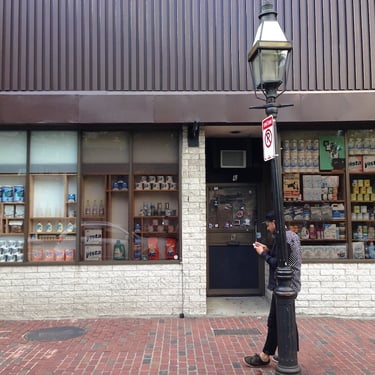
That’s how I ended up outside a place called Bodega. If you don’t know it, it looks like nothing. A beat-up convenience store. A couple of sad snacks. A fridge humming over in the corner. The kind of storefront you walk past without even glancing.
I stand outside for a second, long enough to plan my exit strategy once I learn I’m in the wrong place and buy a $4 bottle of water out of shame. Then I go for it.
Inside, there’s another hidden entrance. And behind that, this clean, curated space that couldn’t be more opposite the front. Precise. Confident. Half clothes, half shoes…and a little if you know you know.
A few minutes later I’m walking out with a pair of denim SB Nikes I didn’t plan to buy, and I’m smiling, because Boston just did it again. A thing that looks like nothing turns out to be something.
I head back toward the car and I’m still thinking about the folding chair. If I had stayed in that spot—if I had stood my ground because I was technically right—I’d have made myself a target. Not because Boston is cruel, either. But because Boston is literal. The person who shoveled that space doesn’t care about my side of the story. They care about the work.
I drove back out of the city that night, past those rectangular signs–NOW ENTERING FRAMINGHAM. NOW ENTERING WORCESTER. NOW ENTERING SPENCER.
When I got back to my grandparents house, I looked at my Dad’s car—half a ton of salt on it, but no slashed tires. No broken windows. Just a clean exit.
And a city that never once explained itself to me, but quietly watched whether I was paying attention.
***
“And so that’s kind of something that I haven’t experienced in other cities. I think that, when I lived in London for example, there are a bunch of different workers, restaurants and at the cafes, the people that you see on the Tube are quite different every day. Same as Tokyo. But I think there’s a lot of familiarity in Boston that you can’t really find anywhere else. Especially in another big city."
“If you saw a clean, nice car on the north shore in the 80s, in the winter? The guy was connected."
"The right side of the escalator is for standing. The left side is for walking up."
“We may not be the friendliest or the most outgoing. Sometimes our hair might look a little crazy. But you know, we got heart. We got that heart and soul. And we got honesty."
***
When I think about Massachusetts, my first thought isn’t history or sports, or smart universities.
I think about corrections. Because this place has a way of teaching you without a speech. It doesn’t explain itself. It just shows you what happens.
In Spencer, I learned that in ten seconds. Two dogs. Panic. I ran–because running felt like the only move I had. And the second I ran, the whole street changed. The dogs lit up. The chase became real.
Then this kid—barely older than me, leaning against a brick wall like he’d seen a hundred winters—sorted me out: ‘Don’t run.’
Not advice, not comfort. Just information.
And it worked. The moment I stopped, the whole thing stopped–like I’d accidentally hit a switch and he’d just reached over and turned it back off.
I learned that lesson early here: intent doesn’t matter. Consequences do.
Years later, on that golf course outside Boston, I walked into the same kind of lesson–just dressed up nicer. I didn’t play golf. I tried to look like I played golf. I tried to see if the illusion could substitute for skill, and the ball exposed me instantly.
That’s one cool thing about golf: it has a fraud detector built in. You can’t charm a ball into going straight. You can’t talk your way out of the wind. There’s only your swing and the truth.
So I finally did the Massachusetts thing: I stopped trying to look right and started trying to be right. I ditched the driver for the 5-iron. Low, straight. Repeatable.
And then Boston made the same point again, with a folding chair.
Someone cleared that space. Someone did the work. And in that neighborhood, after a storm, the work is the claim. If you pretend you don’t understand that, Boston won’t debate you…it just lets you find out. Instinctively, I learned to stop arguing with what the sign says and ask what actually matters here.
And that’s bigger than Boston. Every part of life has a surface version and a real version. Relationships. Families. Jobs. Situations where the pressure to play the part doesn’t match the quiet sense of what’s right.
The danger isn’t always the dogs. It’s the story you invent when you’re moving so fast that you don’t have to notice what’s true.
Boston has a way of refusing that fantasy–of dragging you out of your head and into the moment. It forces you to stop narrating and start noticing.
And that’s what expertise really is. Not knowing every rule—but knowing which rule matters, and when the street has its own law.
Beginners follow the posted signs and miss the code. Competent people learn what’s enforced. And experts–real ones–know when to break the surface rule without breaking what it’s protecting.
Golf is a game, but it’s also a rehearsal for places where things actually get decided. In a lot of settings, you can perform for years. You can hide behind big words and decks with charts that always go up and to the right. You can sound like an expert without ever having to prove it.
But every now and then, you end up in a room where jargon doesn’t work. A real problem hits the table and it doesn’t care about your title or your story.
That’s your tee box.
And in those moments, the “proper” move may be the driver: it signals you’re a player, but it comes with the risk of shifting the cost to someone else, just so you don’t have to look silly. I’ve been in those rooms, where being “aligned” was basically a slice: nice sound, clean at contact, never mind the fact that it’s going to land in someone else’s fairway.
So I’ve learned to get comfortable with the 5-iron move: the truth I can repeat. The shot I can take again.
That’s Boston to me. No comfort, just correction. And exactly as much space as you’ve earned. You learn to stop arguing with the surface, and read what’s running the room.
***
“I’m proud to be from Boston, I’m proud to have an accent and not pronounce my ‘R’s’ like everyone else does. I’m an iron worker with Local 7, out of Boston. Born in Boston. Met my fiancee in Boston. Just about my whole life is built by Boston."
“And so that’s what I really like about Boston. The familiarity and the routine that you’re able to find in a big city that you can’t find in other similar-sized cities."
"Someday this Bostonian may suffer through a Northeaster and say that I’m looking for some warmer weather. But if this girl leaves Boston, you’ll never be able to take the Boston out of this girl."
"Mostly to not talk, or ask about the incident."
"I love chocolate frappes. Chocolate ice cream and milk. I put jimmies on my ice cream. I have never parked my car in the Harvard Yard. I frequent the packie."
"Mind your business, and step up when people need help."
***
Hi again, Steven here, a couple of quick things
I want to thank the Boston & Massachusetts artists who added flavor to this episode. As you probably know, every song here is from an artist either from or based out of the state. I’m starting to get a hard time about “rights” to include the music–I don’t have a legal team yet to sort this out–-but I’m sticking with it for now because I really like the vibe it adds. But if I ever remove an episode or have to change the music, that’s why. Hopefully that won’t be a real issue.
More importantly, thanks to the Boston locals and natives who gave me their insights, including my own Mother—shoutout Mom, I love you.
Next up will be Chicago–where my Dad is from…and we’ll wrap Season One with my home state of Virginia. Since we’re getting closer to that, I am going to need to rely more and more on you, my early audience.
After Virginia I’m going to start exploring other cities, which means I’ll need to find more stories to tell that aren’t always going to be my own. So, if you want to share how your city has shaped you, or have any interesting friends I should talk to, let me know. The future of this show is really going to be about you.
If you enjoyed this episode, or any other, show some love…“like”, follow, comment, or just telling a friend costs you nothing and helps me a lot. I’m really grateful for it.
For the music, all artists & songs – and the Spotify playlist – are on the Boston episode page at EveryCity Whispers dot com – link in the episode description. I’m posting short clips every day to Instagram, TikTok and YouTube – @ Everycity Whispers for all three. And if you want to reach out for any reason, my email is: steven @ everycitywhispers.
Thank you, thank you, thank you for listening to the Boston episode of EveryCity Whispers. Next up is Chi-town, and until then…remember: you don’t have to move cities to move yourself forward. Cities don’t shout, they whisper. If you stay curious and listen closely, you’ll hear them.
***
(“Friar Tuck” scene from “Ted”, part 1)
"Of course I know what a frappe is. I worked at Friendly’s in high school, at the Dedham Plaza. Milk, syrup, ice cream. I made a million frappes. I made a million fribbles."
"Where would you park? What do you mean? Like if you had SmartPark, where would you park? I imagine you could park anywhere. The market? Sure. Beach park? Yep. Skate park? Of course!"
"No frappy chitchat here. The only thing I’m gonna talk about tonight is seltzer. Polar Seltzer to be exact. Go to a restaurant, you say ‘honey, I want myself a seltzer.’ She says ‘a seltzer?’ And you’re like *** ‘I want seltzer.’"
(“Wicked smart” scene from “Good Will Hunting”)
"So, a lot of people from Boston claim to know Marky Mark. But I actually do know Marky Mark. Yeah, he and I used to play a little baseball together, back in the day. So I went up to him, I was like ‘hey Mark, remember me?’ He was like ‘yeah, how do I know you?’ I congratulated him on all his success. I mean, what, am I not going to acknowledge that this guy’s a movie star and just an incredible actor? I appreciate what he does. But I’m also not a ***, I’m not gonna harass the guy when he’s having lunch with his pals."
"People harass me all the time at work, like ‘what are you doing on Tuesday?’ On Tuesday I’m going to the bar, I’m having a beer, because I’m playing darts. They don’t understand what I’m saying, because that’s what happens when you speak a true Boston accent. I’m just saying."
(“Friar Tuck” scene from “Ted”, part 2)
TRANSCRIPT
EVERYCITY WHISPERS
KNOW THE WORLD. KNOW THYSELF.
© 2026. All rights reserved.